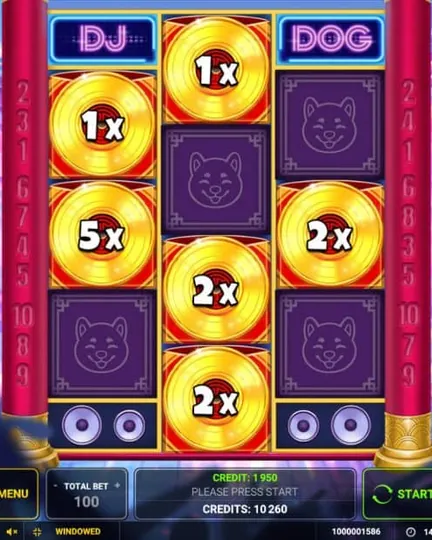
The product combines a compact slot layout with a neon club performance. Winny, vinyl artwork and the mixing booth give the three-reel screen a consistent musical identity. Responsive presentation changes scale rather than product logic. Desktop layouts show more atmosphere around the booth; portrait phone layouts bring the reels and touch controls closer together. Three reels remain three reels, ten lines retain their role, and the Lucky Spins screen uses the same vinyl-and-blank structure.
GREENTUBE · MUSIC SLOT
DJ Dog on Mobile

A three-reel window transfers naturally to a phone. Portrait screens can keep the symbols large while placing stake, spin and menu controls within reach. Android browsers and iPhone Safari retain the same game identity without requiring a separate miniature catalogue.
PLAY DJ DOGABOUT THE SET
DJ Dog on Mobile in focus
A three-reel window transfers naturally to a phone. Portrait screens can keep the symbols large while placing stake, spin and menu controls within reach. Android browsers and iPhone Safari retain the same game identity without requiring a separate miniature catalogue.
DJ Dog uses a compact structure to make the theme and the outcome visible at the same time. The reel window does not need to dominate every pixel because three columns keep the symbols large. Space around the grid can therefore carry speakers, lighting and Winny’s mixing booth without forcing essential values into a crowded overlay.
The Product at First Glance
Responsive presentation changes scale rather than product logic. Desktop layouts show more atmosphere around the booth; portrait phone layouts bring the reels and touch controls closer together. Three reels remain three reels, ten lines retain their role, and the Lucky Spins screen uses the same vinyl-and-blank structure.
Viewed through portrait presentation and touch interaction, the practical point is clear. Vinyl records connect multiple parts of the design. They belong naturally beside a DJ booth, appear throughout the music-led artwork and become the exclusive active symbol type during Lucky Spins. Because the same object moves from atmosphere to mechanic, the feature feels like part of Winny’s set rather than an unrelated bonus screen.

Why the Screen Stays Readable
The strongest way to inspect DJ Dog is to separate its layers. First identify the reel shape and line system, then look at Winny’s character presentation, and finally examine how Lucky Spins changes the symbol set. This approach explains why the game feels energetic while still using a relatively concise mechanical foundation.
Viewed through portrait presentation and touch interaction, the practical point is clear. Lucky Spins awards eight free spins and simplifies what can land. Records and blank positions replace the broader base presentation, giving the feature a sparse, focused rhythm. A counter and feature label maintain orientation, letting the user see that the game is in a special sequence and how much of that sequence remains.
From Club Artwork to Reel Feedback
DJ Dog uses a compact structure to make the theme and the outcome visible at the same time. The reel window does not need to dominate every pixel because three columns keep the symbols large. Space around the grid can therefore carry speakers, lighting and Winny’s mixing booth without forcing essential values into a crowded overlay.
Viewed through portrait presentation and touch interaction, the practical point is clear. The interface gives the spin control the strongest action weight, with stake selection and current session values nearby. Sound, history and game details remain available but visually secondary. This arrangement supports deliberate input and reduces the chance that an animated part of the stage will be mistaken for a button.
What Changes During a Feature
Ten win lines create more paths than the reel count might initially suggest. Line markers and temporary highlights provide the useful layer: they identify the evaluated route, emphasize participating symbols and then release the screen for the next action. This sequence keeps result feedback separate from the persistent neon decoration.
Viewed through portrait presentation and touch interaction, the practical point is clear. Music and movement establish energy, but DJ Dog also communicates without relying on audio. Reel stops, symbol emphasis, line illumination and counters convey the current state visually. Sound can be reduced when a device is used in public, while the core sequence and feature transition remain understandable on screen.

Controls Around the Main Stage
Vinyl records connect multiple parts of the design. They belong naturally beside a DJ booth, appear throughout the music-led artwork and become the exclusive active symbol type during Lucky Spins. Because the same object moves from atmosphere to mechanic, the feature feels like part of Winny’s set rather than an unrelated bonus screen.
Viewed through portrait presentation and touch interaction, the practical point is clear. Responsive presentation changes scale rather than product logic. Desktop layouts show more atmosphere around the booth; portrait phone layouts bring the reels and touch controls closer together. Three reels remain three reels, ten lines retain their role, and the Lucky Spins screen uses the same vinyl-and-blank structure.
Sound, Motion and Visual Cues
Lucky Spins awards eight free spins and simplifies what can land. Records and blank positions replace the broader base presentation, giving the feature a sparse, focused rhythm. A counter and feature label maintain orientation, letting the user see that the game is in a special sequence and how much of that sequence remains.
Viewed through portrait presentation and touch interaction, the practical point is clear. The strongest way to inspect DJ Dog is to separate its layers. First identify the reel shape and line system, then look at Winny’s character presentation, and finally examine how Lucky Spins changes the symbol set. This approach explains why the game feels energetic while still using a relatively concise mechanical foundation.
The Same Identity on Smaller Screens
The interface gives the spin control the strongest action weight, with stake selection and current session values nearby. Sound, history and game details remain available but visually secondary. This arrangement supports deliberate input and reduces the chance that an animated part of the stage will be mistaken for a button.
Viewed through portrait presentation and touch interaction, the practical point is clear. DJ Dog uses a compact structure to make the theme and the outcome visible at the same time. The reel window does not need to dominate every pixel because three columns keep the symbols large. Space around the grid can therefore carry speakers, lighting and Winny’s mixing booth without forcing essential values into a crowded overlay.

A Clear Way to Explore the Game
Music and movement establish energy, but DJ Dog also communicates without relying on audio. Reel stops, symbol emphasis, line illumination and counters convey the current state visually. Sound can be reduced when a device is used in public, while the core sequence and feature transition remain understandable on screen.
Viewed through portrait presentation and touch interaction, the practical point is clear. Ten win lines create more paths than the reel count might initially suggest. Line markers and temporary highlights provide the useful layer: they identify the evaluated route, emphasize participating symbols and then release the screen for the next action. This sequence keeps result feedback separate from the persistent neon decoration.

WINNY'S SET
Records only. Eight spins. One focused feature.
Lucky Spins awards eight free spins and simplifies what can land. Records and blank positions replace the broader base presentation, giving the feature a sparse, focused rhythm. A counter and feature label maintain orientation, letting the user see that the game is in a special sequence and how much of that sequence remains.
OPEN DJ DOGQUICK REFERENCE
DJ Dog product facts
| Product | DJ Dog |
|---|---|
| Studio | Greentube |
| Format | Feature slot |
| Page focus | DJ Dog Mobile Play on Android and iPhone Browsers |
| Key elements | Reel screen, DJ character and bonus presentation |
| Device presentation | Responsive desktop and mobile layout |
QUESTIONS / ANSWERS
DJ Dog FAQ
Winny is the dog DJ who hosts the game from behind the decks. His character art connects the title, reel stage and Lucky Spins presentation.
Three reels keep symbols large and outcomes visually concentrated. The compact shape also leaves room for character animation and practical controls.
There are ten win lines. Their patterns add variety within the small reel window and are identified with interface cues when a result is evaluated. Ten win lines create more paths than the reel count might initially suggest. Line markers and temporary highlights provide the useful layer: they identify the evaluated route, emphasize participating symbols and then release the screen for the next action. This sequence keeps result feedback separate from the persistent neon decoration.
Participating symbols and the relevant line receive temporary visual emphasis. This separates outcome feedback from decorative light and motion.
Lucky Spins begins when the game activates its feature condition. The screen then switches from the normal reel content to the special record-focused sequence.
Eight free spins are awarded in the Lucky Spins feature. A counter helps distinguish the remaining spins from ordinary base play. The interface gives the spin control the strongest action weight, with stake selection and current session values nearby. Sound, history and game details remain available but visually secondary. This arrangement supports deliberate input and reduces the chance that an animated part of the stage will be mistaken for a button.
Only vinyl records and blank symbols can land during the feature. That limited set creates a clean and immediately recognizable feature screen.
Yes. The compact reel shape works well in portrait orientation, leaving space for readable symbols and reachable touch controls.
Spin is treated as the primary action, while stake adjustment and current values sit close by. Menus and history remain secondary. The strongest way to inspect DJ Dog is to separate its layers. First identify the reel shape and line system, then look at Winny’s character presentation, and finally examine how Lucky Spins changes the symbol set. This approach explains why the game feels energetic while still using a relatively concise mechanical foundation.
Audio options allow music and effects to be adjusted. Visual animation and highlights still show reel and feature states when sound is reduced.
The interface can provide a history or records area for checking completed results and session activity without relying on memory.
Winny, vinyl records, decks, speakers and a cyan-magenta club palette form the main visual language of DJ Dog. Vinyl records connect multiple parts of the design. They belong naturally beside a DJ booth, appear throughout the music-led artwork and become the exclusive active symbol type during Lucky Spins. Because the same object moves from atmosphere to mechanic, the feature feels like part of Winny’s set rather than an unrelated bonus screen.